The Defense Gap: The 2026 CLM Study Reveals an Industry Falling Behind
What the 2026 CLM Study reveals about rising costs, AI adoption, and the growing intelligence gap in litigation management.

by Rebecca Side
The plaintiff bar is not standing still.
If you’ve spent any time in litigation over the past year, that probably won’t come as a shock.
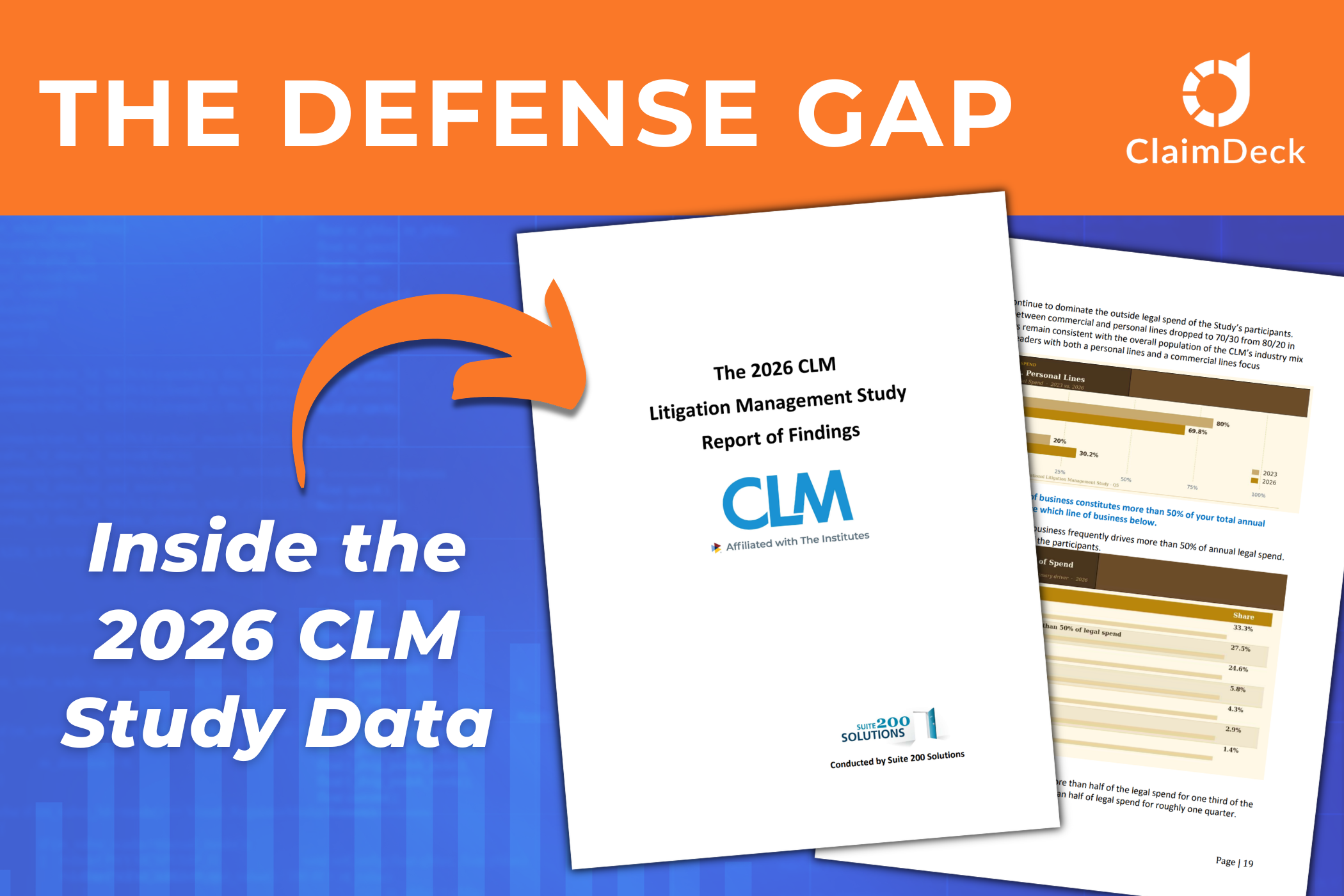
What is interesting is just how clearly the 2026 CLM Litigation Management Study puts numbers behind what most of us have been feeling for a while.

More than 80% of litigation executives now describe plaintiff-side AI adoption as a meaningful threat, and not a single executive said it wasn’t.
Which, in an industry that rarely agrees on anything, feels… notable.
This Isn’t One Problem — It’s Everything, All at Once
One of the things I like about this study is that it doesn’t try to simplify things.
Because the reality is, it’s not simple.
It’s not one issue. It’s all of them:
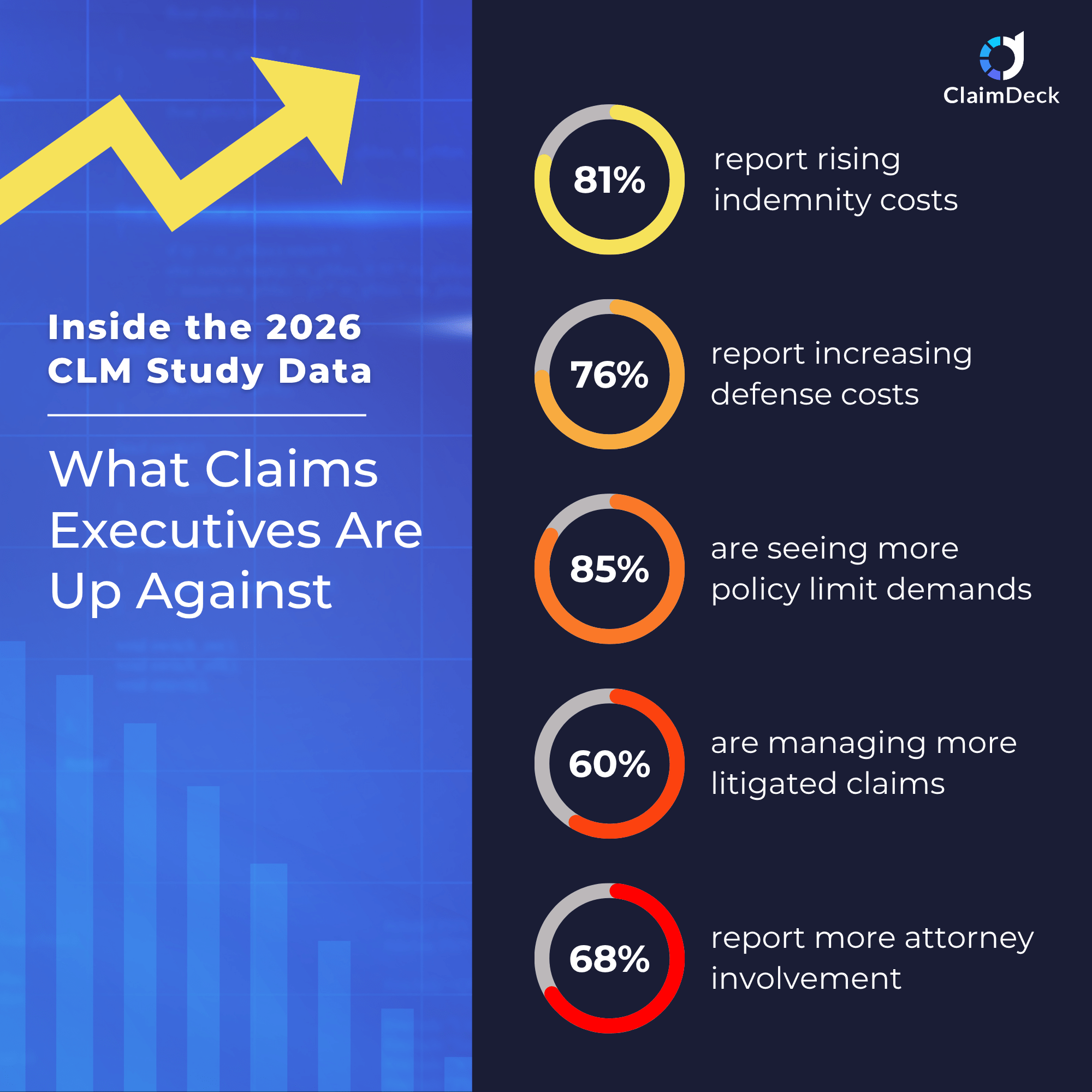
81% of executives report rising indemnity costs
76% report increasing defense costs
85% are seeing more policy limit demands
60% are managing more litigated claims
68% report more attorney involvement
At this point, if your costs aren’t going up, I think you’re the outlier.
You can feel this in conversations; it’s no longer “what’s the issue?”
It’s “which one do we start with?”
Meanwhile… the Plaintiff Bar Hasn’t Been Waiting Around
While we’ve been debating guidelines, budgets, and billing models…
The plaintiff bar has been getting on with it.

They’re using AI to:
Identify stronger cases earlier
Build more compelling demands
Push more claims towards policy limits
Some tools are claiming a 30% increase in settlement value.
Now, whether you believe every percentage point or not…
…you can be fairly confident they didn’t invest in it for fun.
And This Is the Bit That Makes Me Slightly Uncomfortable
It would be easy to say this is a technology problem.
Buy better tools, problem solved.
But when you look at the data, that’s not really it.
The bigger issue is what we’re not tracking.
Over half of carriers don’t track policy limit demands
Almost none track plaintiff firm intelligence
Most don’t track litigation funding or time-limited demands
And yet… those are exactly the things driving outcomes.
At the same time, executives rate their confidence in their own litigation data at 47 out of 100.
Which is about where I’d rate my confidence in assembling flat-pack furniture without the instructions.
And this isn’t theoretical.
We had a conversation recently with a prospective client who told us something that genuinely stopped me in my tracks.
He had accidentally been sent a report… on himself.
It outlined his historical settlement behavior as an adjuster, how often he settled against policy limits, and at what percentage he typically landed in negotiations.
In other words, a playbook.
Not his playbook, the plaintiff’s.
Because all of this data is technically public record. It’s just now being captured, structured, and analyzed by the technology being used on the plaintiff side.
So before a negotiation even starts, opposing counsel can have a very good idea of:
how far they can push
when pressure works
and where the ceiling likely is
Which makes negotiations feel… slightly less like negotiation.
And more like a very well-informed strategy session, just not on our side.
The Defense Side Isn’t Broken — It’s Just… Disconnected
This is the part I think gets overlooked.
The defense side isn’t losing because people aren’t working hard.
If anything, everyone’s working harder than ever.
But it’s fragmented.
Carriers. Law firms. Vendors.
All involved in the same claim…
But not always working from the same picture.
Meanwhile, the plaintiff bar is sharing insight, coordinating strategy, and learning collectively.
We’re still… emailing.
(And yes, I know — “structured email processes” still count as email.)
So It’s Not That Costs Are Rising — It’s That They’re Hard to Control
One stat that really stood out:
Litigation expenses now account for nearly a third of total litigation costs — up significantly from previous studies.
At the same time, many organizations still don’t have full visibility into what’s actually driving those costs.
So you end up in a slightly uncomfortable position where:
Costs are increasing
Complexity is increasing
And your ability to explain why is… improving slowly
That’s when it starts to feel less like management and more like firefighting.
The Good News (Yes, There Is Some)
If there’s one really positive signal in the study, it’s this:
79% of executives say litigation effectiveness has been raised at CEO level in the past 12 months.
Translation: This has made it out of the claims department.
And once something becomes a board-level conversation, things tend to move a bit faster.
So Where Does That Leave Us?
The study outlines three big imperatives:
Close the technology gap
Create information parity
Rethink how carriers and counsel work together
None of which are particularly controversial.
But all of which require doing things differently than we have been.
For me, it really comes down to this:
→ Better, shared, usable data
→ Less friction between the people managing the claim
→ And a clearer link between decisions and outcomes
(Not revolutionary ideas — just surprisingly difficult to execute consistently.)
Final Thought
I don’t think the industry is behind because it’s slow.
I think it’s behind because the problem has evolved faster than the way we’ve traditionally managed it.
The gap isn’t coming.
It’s already here.
The real question is how quickly it becomes visible in performance…
…and who decides to do something about it before it does.

Learn how ClaimDeck helps carriers cut case life by 200+ days, reduce spend, and make litigation AI-ready.

ClaimDeck™ eliminates claims litigation leakage for carriers while driving process into the law firm, modernizing the litigation process.
Follow ClaimDeck on LinkedIn.