The Next Advantage in Litigation Management Is Intelligence
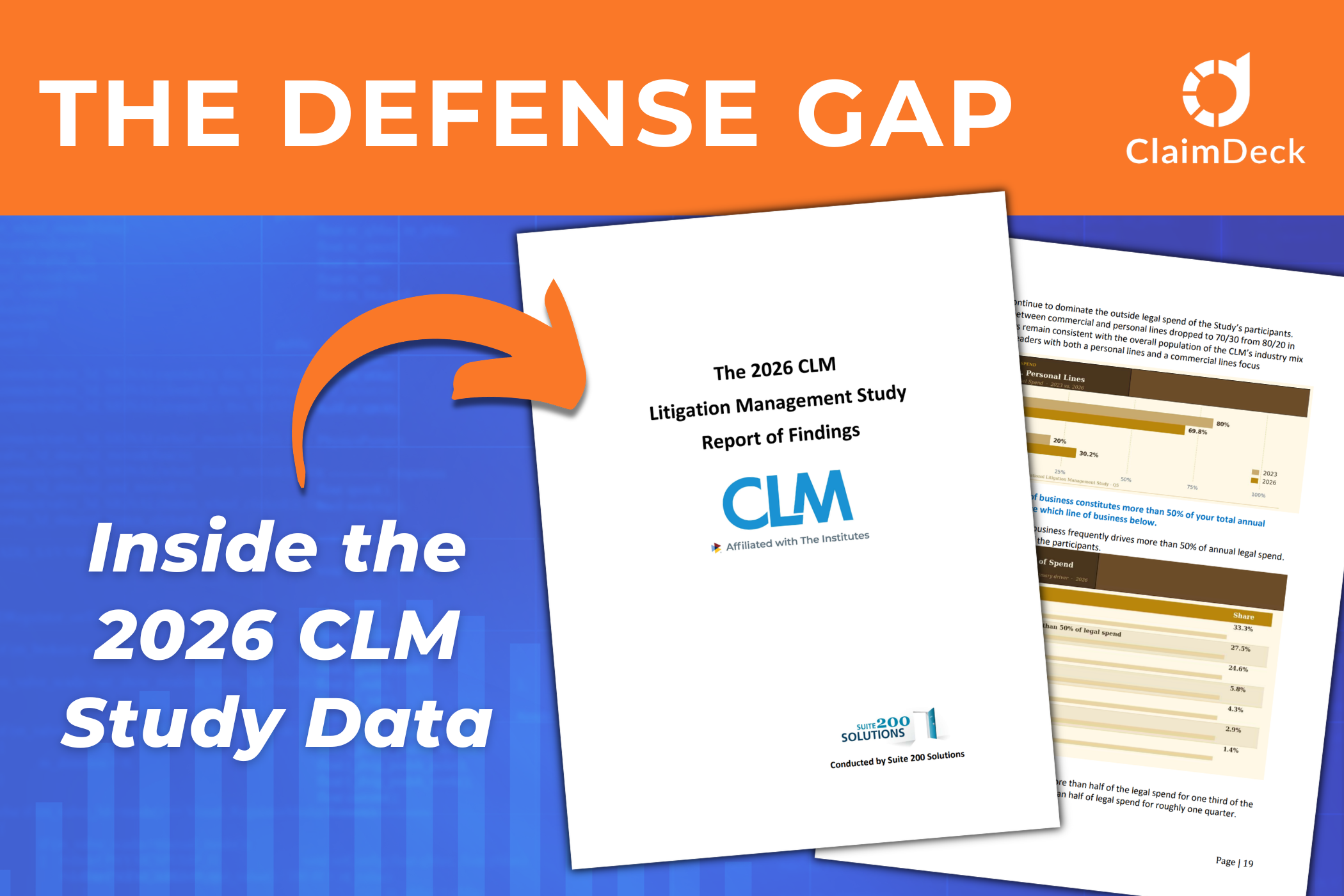
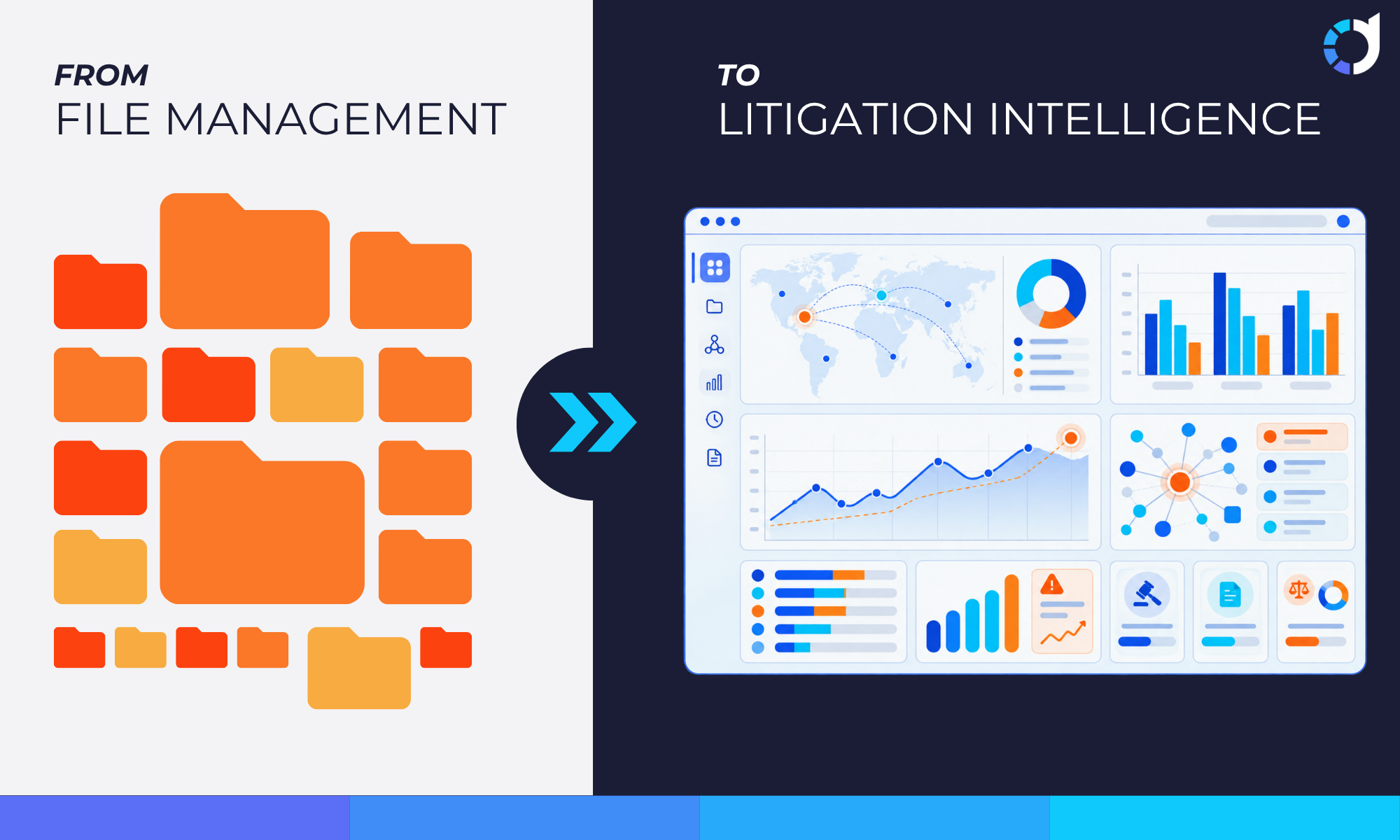
The 2026 CLM Study highlights the shift from file management to litigation intelligence.

by Rebecca Side
The carriers pulling ahead aren’t necessarily the biggest. They’re the most connected.
For years, an advantage in litigation management was often associated with scale.
Bigger panel.
More resources.
More vendors.
More reporting.
But I’m not sure that’s the differentiator anymore.
Because the 2026 CLM Litigation Management Study suggests something else is emerging:
The organizations pulling ahead are likely to be the ones creating the fastest, clearest connections between data, decisions, and outcomes.
And that’s a very different operating model.

The Industry Is Moving From “Managing Claims” to Managing Intelligence
Historically, litigation management has been heavily operational:
assigning counsel
reviewing invoices
monitoring budgets
managing reporting cycles
All important.
But increasingly, that’s table stakes.
Because when litigation volume is rising, indemnity is rising, policy limit demands are increasing, and plaintiff firms are using AI strategically, the advantage shifts to whoever can identify patterns and respond fastest.
And that requires something many organizations still struggle with:
Connected visibility.
The Problem Isn’t Lack of Data. It’s Lack of Usable Data.
This is probably one of the biggest misconceptions in the market.
Most carriers are not lacking information.
If anything, they’re overwhelmed by it.
The issue is that litigation data often exists across multiple systems, different law firms, emails, and inconsistent reporting formats. Much of it is difficult to compare meaningfully.
So instead of creating strategic insight, it creates manual effort.
That helps explain why so many litigation teams feel incredibly busy while simultaneously struggling to identify trends early enough to influence outcomes.
And if we’re honest, nobody got into claims because they had a lifelong passion for spreadsheet reconciliation.
Modern Litigation Management Is Becoming Much More Collaborative
One of the clearest signals in the study is the growing friction between carriers and defense counsel.
The percentage of respondents describing those relationships as stronger has declined over time.
At the same time:
carriers want greater alignment around outcomes
firms are under staffing pressure
everyone is trying to manage increasing complexity
The old operating model is straining.
Modern litigation management cannot function effectively through disconnected emails, static reports, periodic reviews, and retrospective discussions about what already happened.
It increasingly requires shared visibility, real-time collaboration, aligned data, and proactive communication.
Not because it sounds modern.
Because the pace of litigation now demands it.
The Most Forward-Thinking Organizations Are Changing the Question
Historically, many organizations focused on one question:
“How do we control legal spend?”
The more advanced conversations sound different.
They’re asking:
Which firms drive the best outcomes in specific claim types?
Where are policy limit demands increasing fastest?
Which negotiation strategies consistently reduce escalation?
Where are delays occurring operationally?
Which litigation trends are emerging before they become systemic?
That’s not traditional reporting.
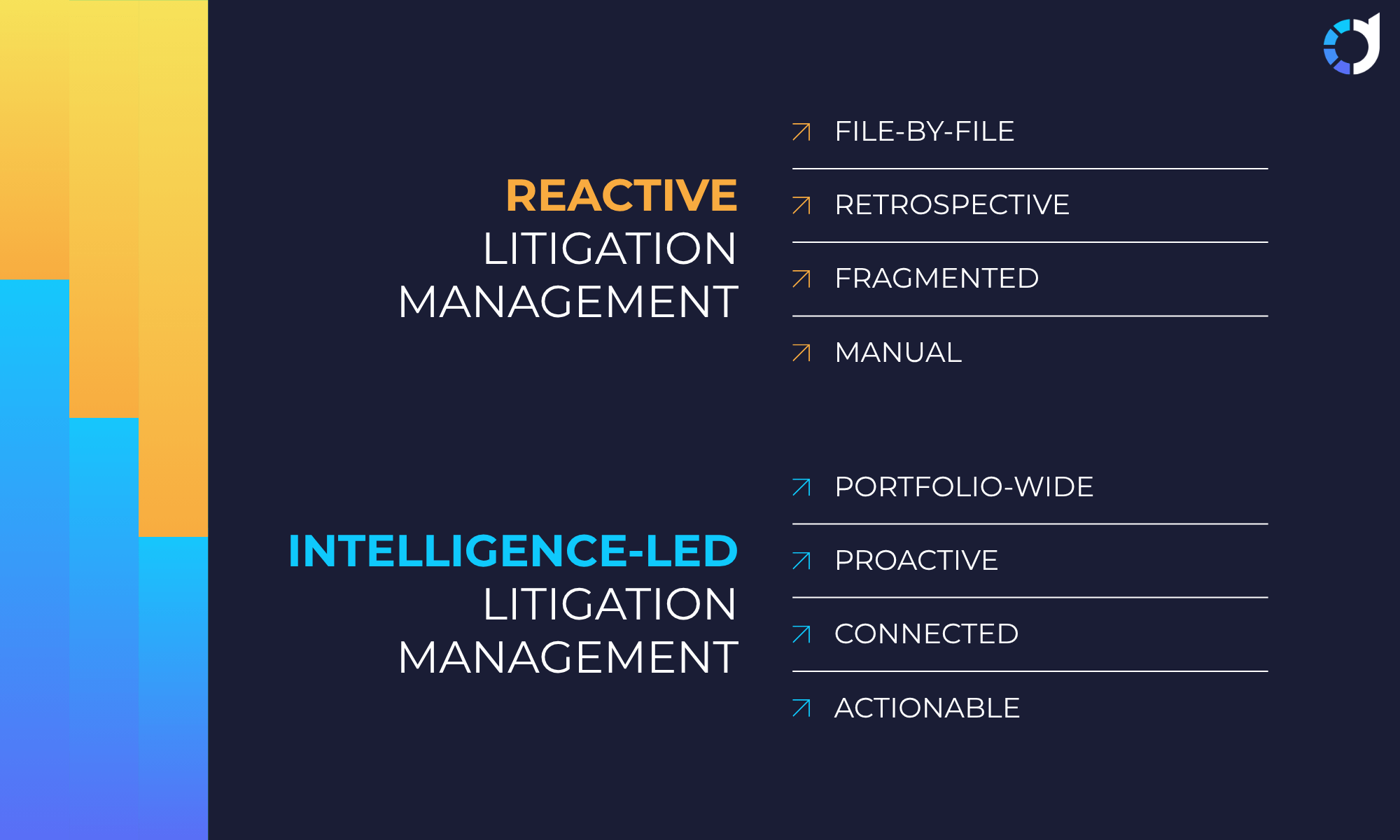
That’s intelligence-led litigation management.
And I think that’s where the industry is heading.
This Is Where Technology Starts to Matter Differently
For a long time, litigation technology conversations focused heavily on storage, workflow, billing, and documentation.
Useful, but largely administrative.
The newer generation of platforms is moving beyond administration toward operational intelligence.
The goal is no longer just:
“Can we manage the file?”
It’s:
“Can we identify and influence outcomes across an entire litigation portfolio?”
That’s a much bigger strategic capability.
And it’s why so many carriers are rethinking the role litigation technology plays within the organization.
The Gap Between Reactive and Proactive Is About to Get Very Expensive
This is the part I think the industry is only beginning to fully appreciate.
The meaningful divide won’t simply be between carriers with technology and carriers without it.
It will be between organizations operating reactively and organizations operating intelligently at scale.
Plaintiff firms are already leveraging behavioral patterns, litigation intelligence, historical settlement data, and strategic analytics.
The defense side cannot afford to respond file by file forever.
Not with today’s litigation economics.
So What Does “Good” Look Like Now?
Increasingly, the strongest litigation organizations are building ecosystems where:
carriers and counsel work from shared visibility
litigation data becomes structured and actionable
trends are surfaced earlier
outcomes are measured consistently
operational friction is reduced
Not perfectly.
But intentionally.
And, importantly, they’re treating litigation management as a strategic function, not simply an administrative one.
That distinction matters.
A lot.
Final Thought
The industry has spent years talking about modernization.
I think we’re now entering the phase where modernization stops being optional.
Because the organizations that adapt fastest won’t simply become more efficient.
They’ll become more informed.
And in litigation, better-informed decisions compound quickly over time.
So while the industry keeps asking:
“What’s the future of litigation management?”
I think the better question might be:
Which organizations are already building it?

Learn how ClaimDeck helps carriers cut case life by 200+ days, reduce spend, and make litigation AI-ready.

ClaimDeck™ eliminates claims litigation leakage for carriers while driving process into the law firm, modernizing the litigation process.
Follow ClaimDeck on LinkedIn.